

Drones are a real career
The skills you built this week - flying, coding, and problem-solving - aren’t just fun. They’re the foundation of one of the fastest-growing tech fields in the world. Drones touch dozens of industries, and every one needs people who understand them.Where the jobs are
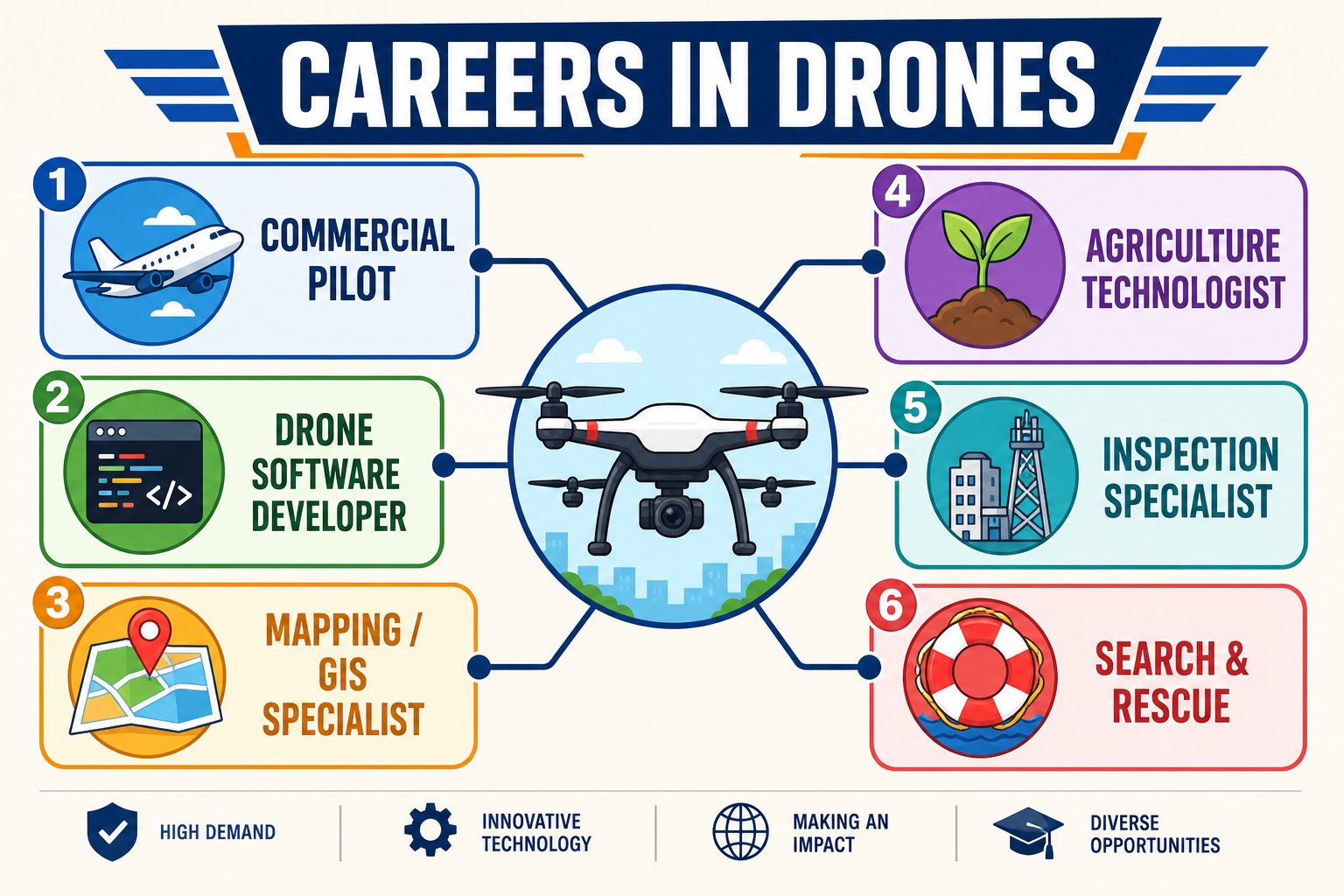
The map of drone careers - and there's room for many more
Commercial drone pilot
Fly drones for film, real estate, inspections, and events. In the US this needs an FAA Part 107 certificate.
Drone software developer
Write the programs that fly drones automatically and plan their missions - exactly the kind of coding you did this week.
Mapping / GIS specialist
Turn drone imagery into 3D maps and surveys for construction, farming, and land management.
Agriculture technologist
Use drones to monitor crops, plan irrigation, and boost harvests on modern farms.
Inspection specialist
Inspect bridges, towers, and power lines by drone instead of by climbing.
Search & rescue / public safety
Operate drones for fire, police, and rescue teams to find people and assess danger safely.
The skills that matter
Notice how much of this week maps directly to real job skills: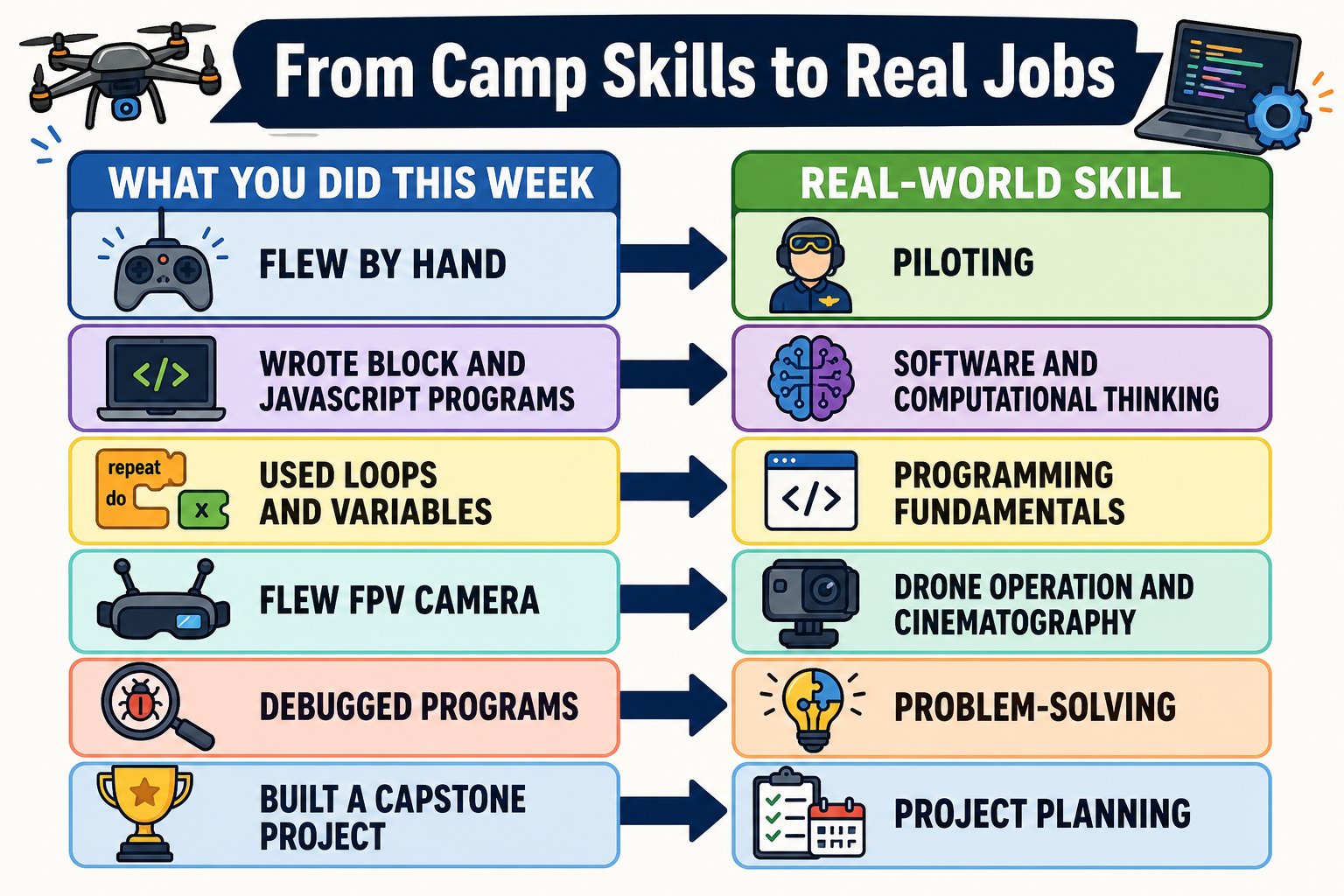
The bridge from camp skills to career skills - you're already on it
The drone industry is projected to be worth tens of billions of dollars and employ hundreds of thousands of people. Demand for people who can both fly and code drones is especially high.
How to keep going
Keep coding
The blocks and JavaScript you used lead straight into Python, app development, and game design.
Keep flying
Practice your piloting and try new missions. If you ever fly bigger drones outdoors, learn the rules first.
Build projects
Keep making things - drones, games, apps. A portfolio of projects opens doors.
Get certified
When you’re old enough, the FAA Part 107 certificate is the standard credential for commercial drone work in the US.
You can name several drone careers and explain how the skills you practiced this week connect to real jobs.