From sticks to movement
Yesterday you learned that every drone movement is throttle, yaw, pitch, and roll. Today you’ll map those directly onto the two joysticks so flying becomes second nature - and so the code you write on Day 3 clicks instantly.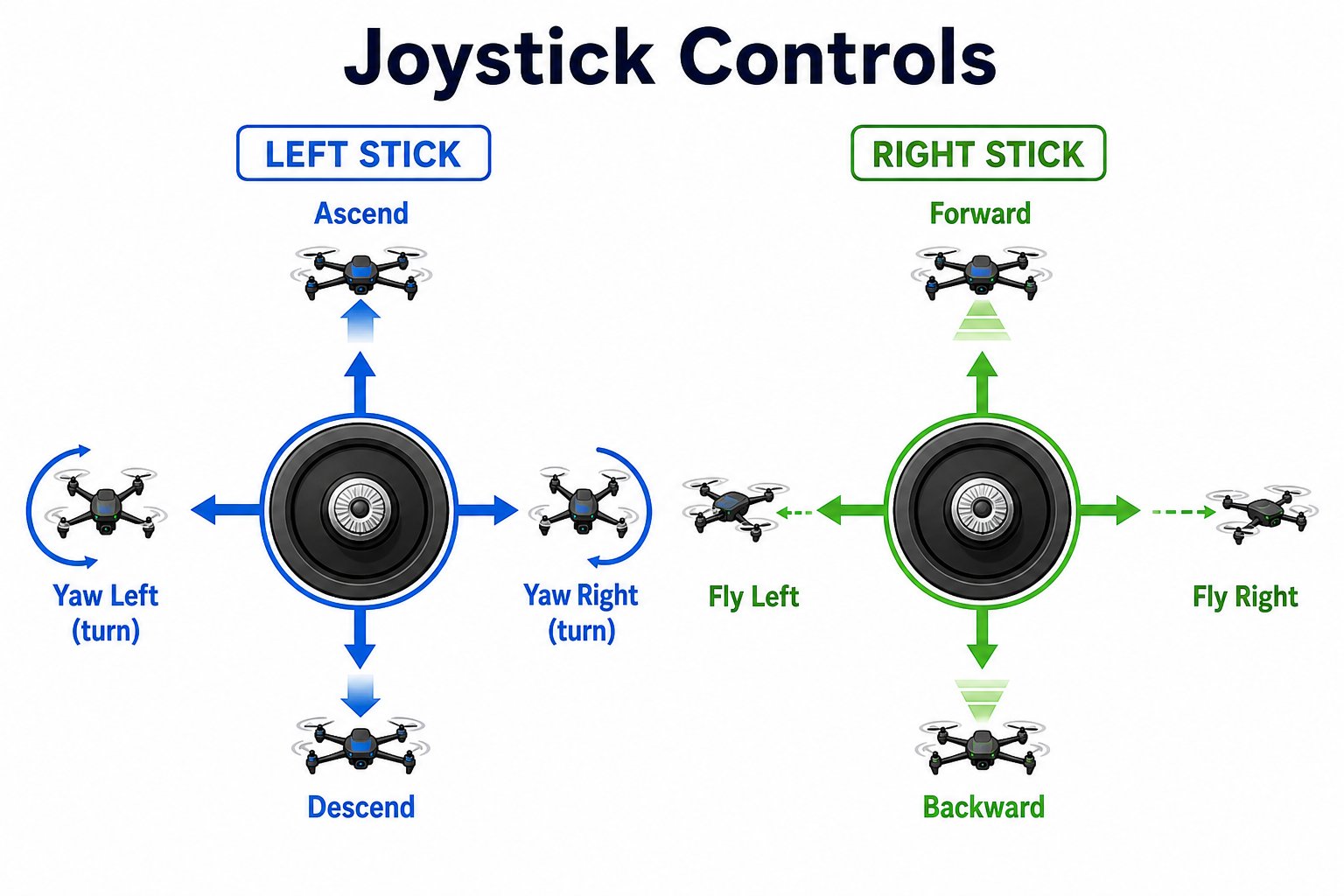
What each joystick direction does
Every stick direction, and the exact movement it creates
The left joystick: altitude and yaw
Push up / down
Altitude (throttle). Up makes the drone rise, down makes it descend. Center holds its height.
Push left / right
Yaw. Spins the drone in place to face left or right, without moving it sideways.
The right joystick: forward, back, and sideways
Push up / down
Pitch. Flies the drone forward or backward.
Push left / right
Roll. Slides the drone to the left or right without turning it.
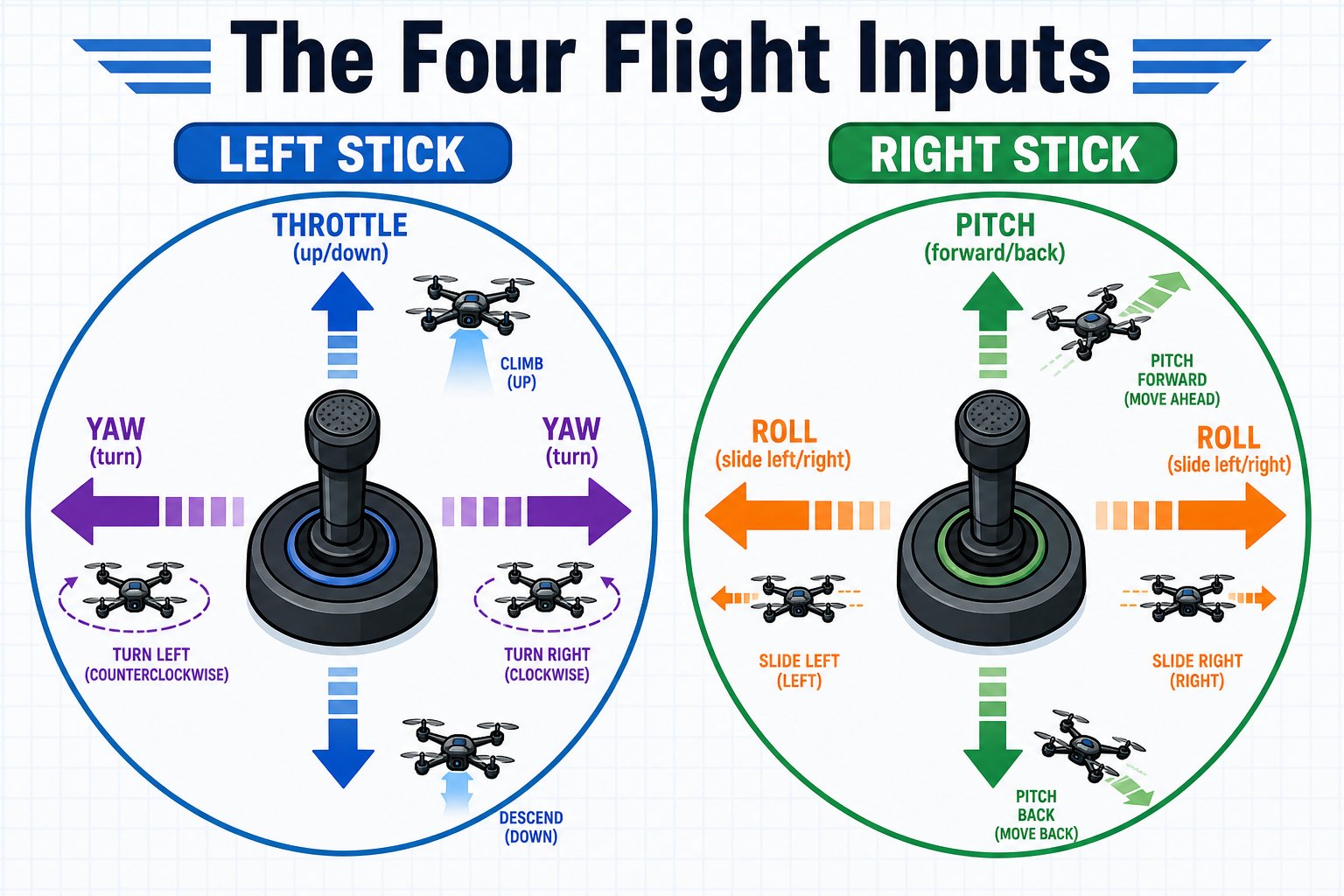
The four inputs, side by side
These four values are exactly what your code will control starting on Day 3. Whether it comes from a joystick or a block of code, the drone only ever understands throttle, yaw, pitch, and roll.
Yaw vs roll - the classic mix-up
New pilots often confuse turning (yaw) with sliding (roll):- Yaw (left stick): the drone rotates to point a new way, like turning your head.
- Roll (right stick): the drone slides sideways while still facing the same way, like stepping to the side.
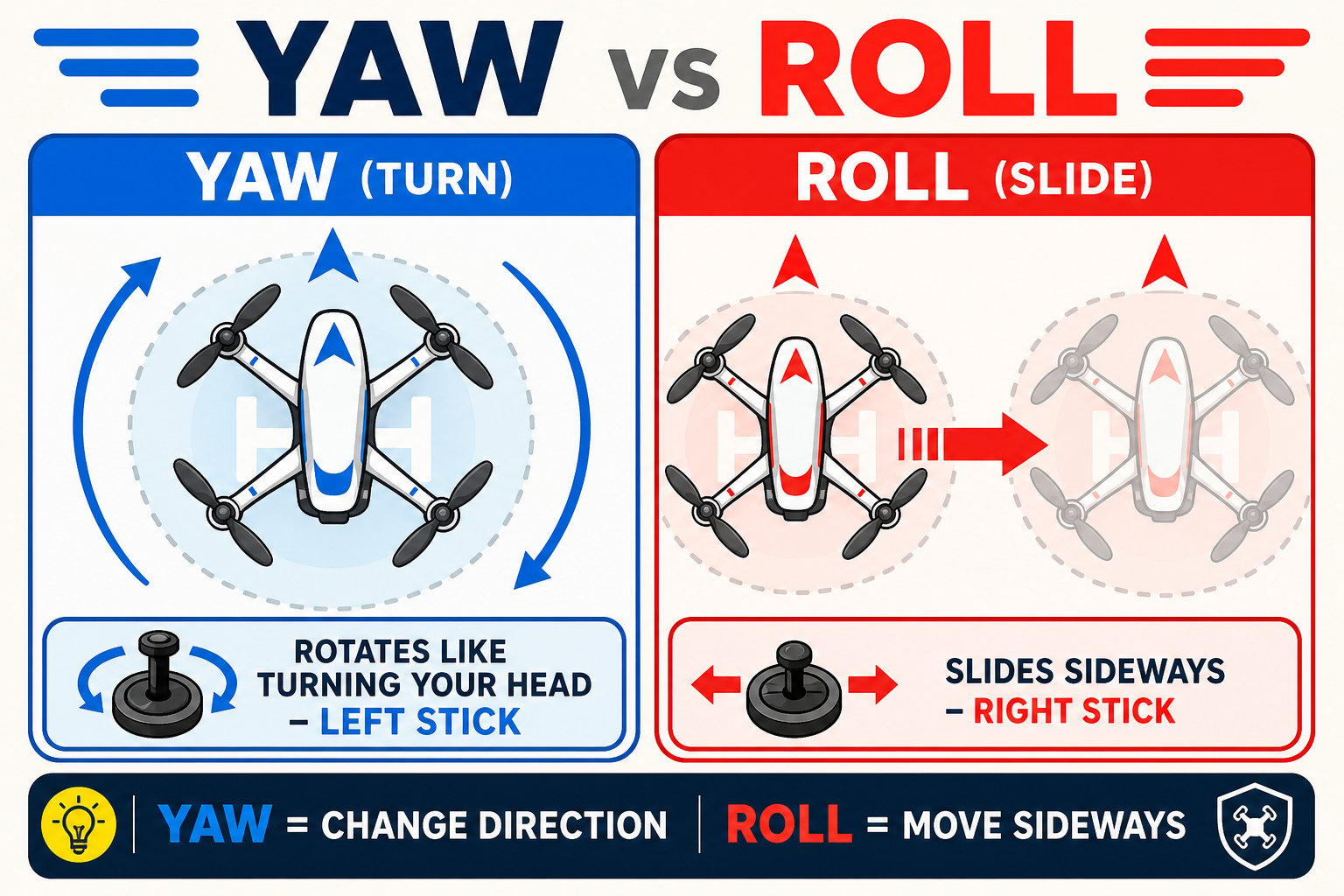
Yaw rotates the drone in place; roll slides it sideways without turning
You can explain which stick controls throttle, yaw, pitch, and roll, and describe the difference between yaw and roll.