A great pilot is a safe pilot
Drones are a ton of fun, but they have spinning blades and share the sky with real aircraft. Every professional pilot follows the same habit: safety before every flight. Build these habits now and they’ll stay with you.Respect the propellers
Before anything else: the spinning propellers are the part most likely to hurt someone. Treat the space around each one as a danger zone whenever the drone is powered on.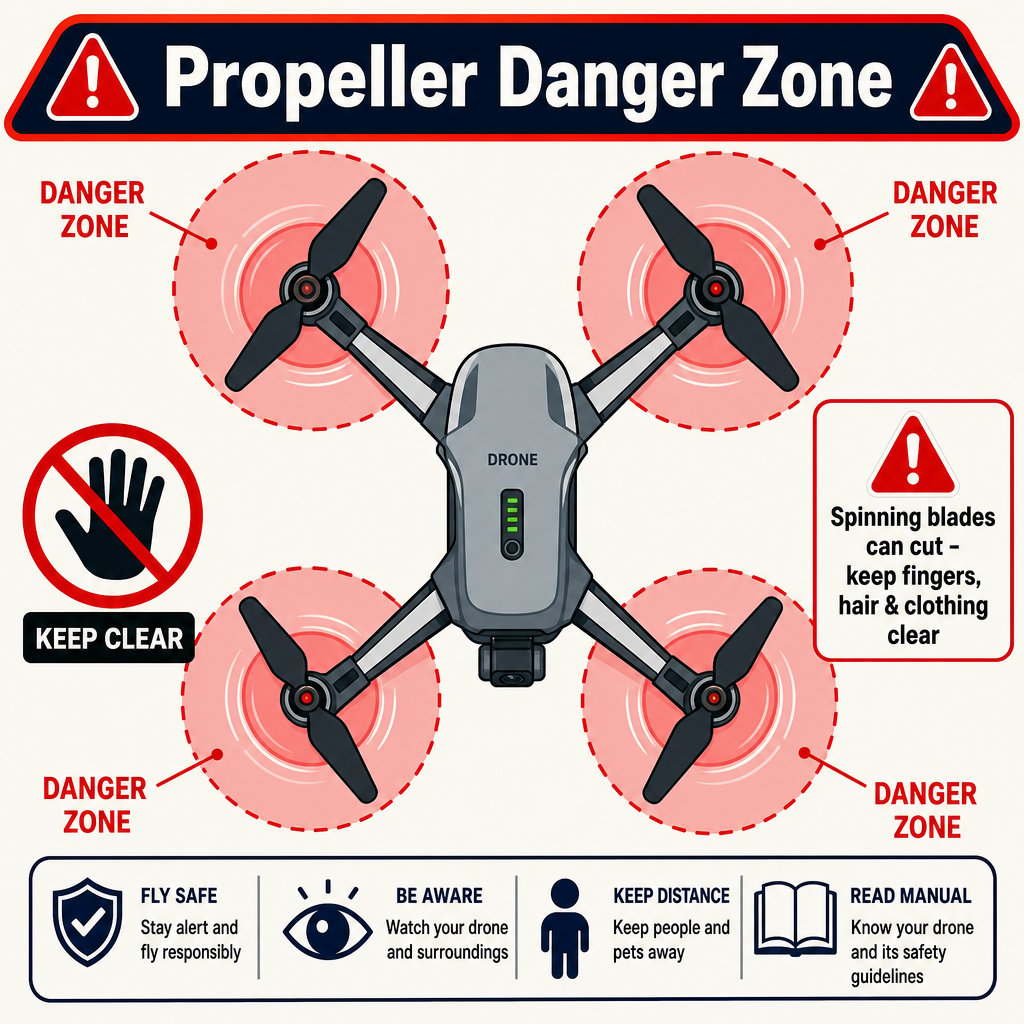
Every spinning propeller is a danger zone - keep fingers, hair, and clothing clear
Pre-flight safety check
Run through this every single time before you power up the motors.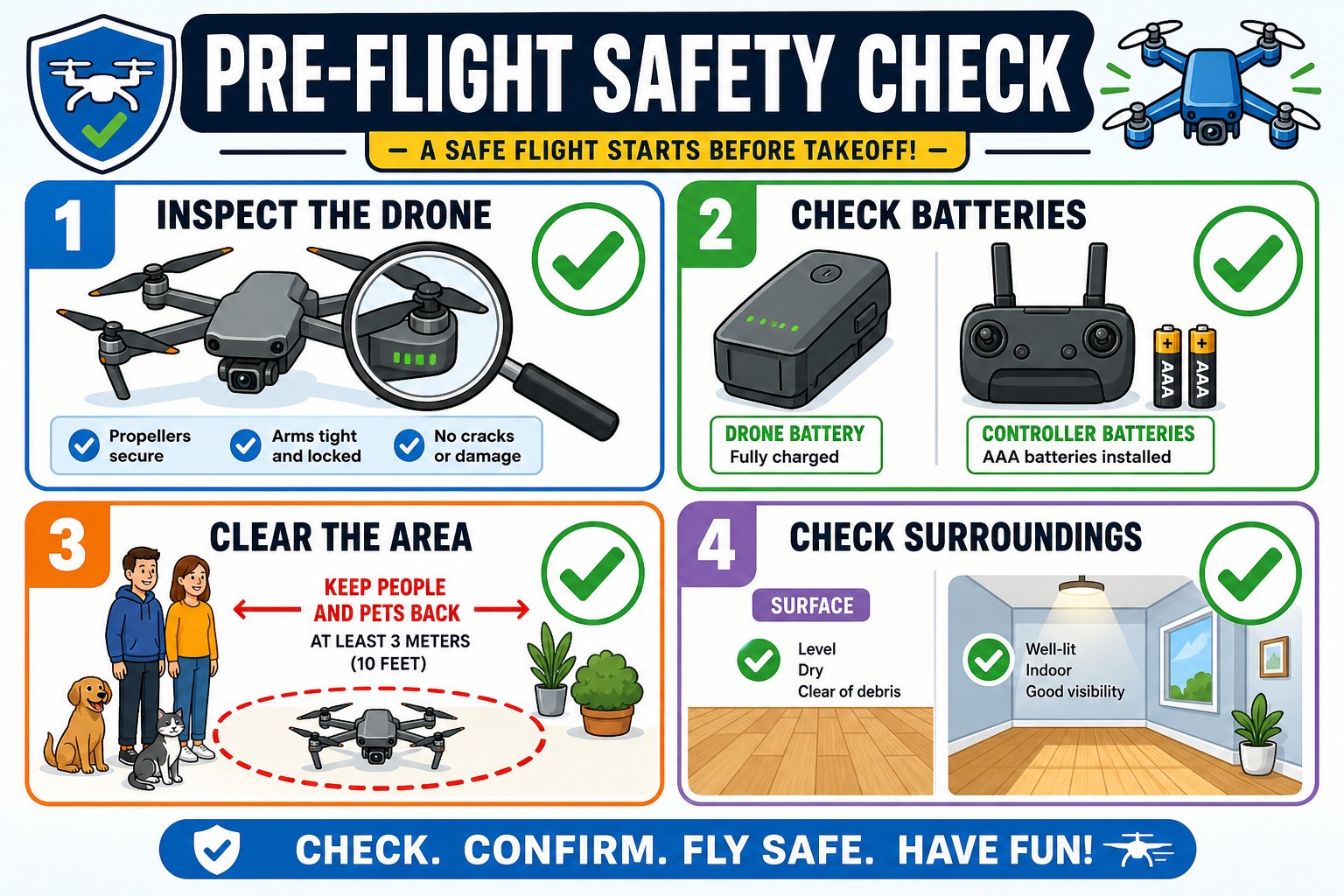
Four checks, every flight - inspect, batteries, clear the area, check surroundings
Inspect the drone
Check that all propellers, prop guards, screws, and the battery are firmly in place and undamaged.
Check your batteries
Confirm the drone battery is charged and the controller’s AAA batteries have power.
Clear the area
Make sure no people, pets, or fragile objects are in the flying space.
Check your surroundings
Fly over a textured, well-lit floor so the optical-flow sensor works, with room above and around the drone.
Where and how to fly
Your Echo is built for calm indoor spaces. Here’s a quick picture of where it’s safe to fly - and where it isn’t.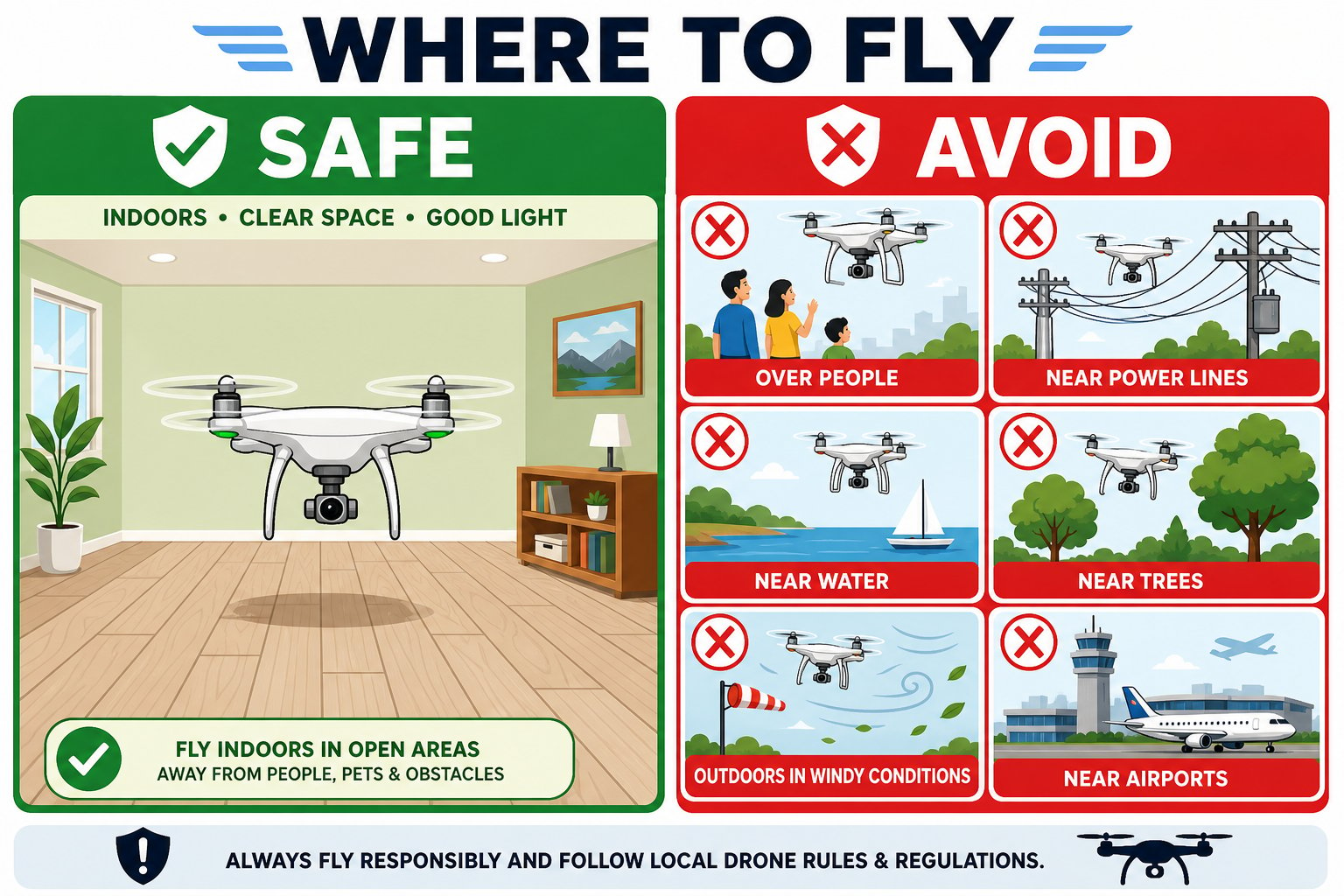
Safe: indoors, clear, well-lit. Avoid: over people, near power lines, water, trees, wind, and airports
Fly indoors, in the clear
This little drone is built for calm indoor spaces. Keep well away from people and animals.
Keep it in sight
Never let the drone fly out of sight or behind an obstacle.
Mind the propellers
Keep fingers, hair, and loose clothing clear whenever the motors can spin.
Never fly over people
A drone can fail and fall at any moment - never fly above someone’s head.
Drone laws and airspace
Real drones share the sky with airplanes and helicopters, so most countries have rules. In the United States, the FAA (Federal Aviation Administration) sets them.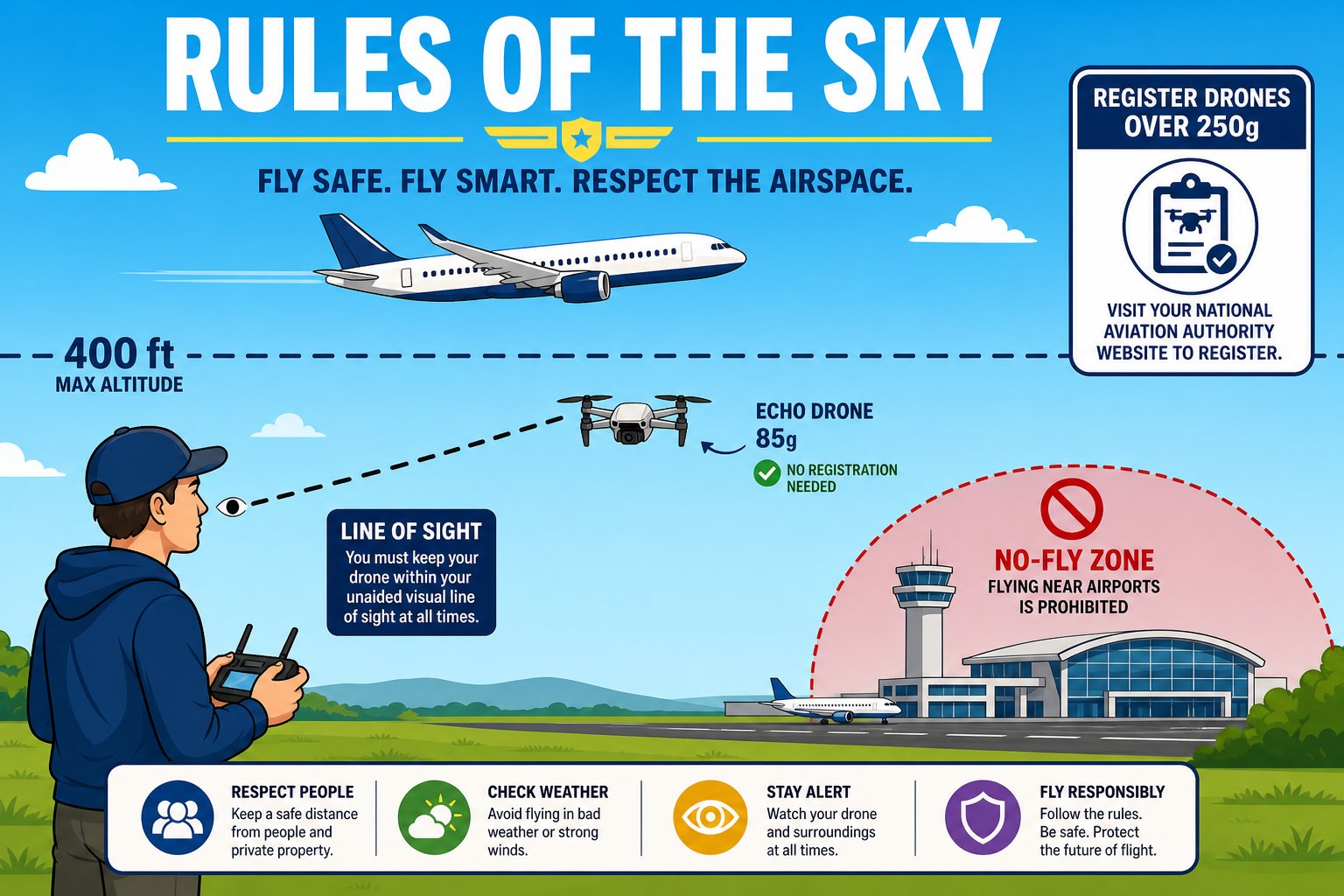
The rules of the sky: line of sight, a 400 ft ceiling, no-fly zones near airports, and registration over 250 g
Registration
Registration
Drones over 250 grams must be registered with the FAA. Your Echo Drone weighs only 85 grams, so it does not need registration - one reason it’s great for classrooms.
Line of sight
Line of sight
Pilots must keep the drone within visual line of sight at all times - no flying blind.
Altitude and airspace
Altitude and airspace
Recreational drones must stay below 400 feet and away from airports and restricted airspace, so they never endanger crewed aircraft.
Privacy and respect
Privacy and respect
Don’t record people without permission or fly over private property uninvited. Being a good pilot means respecting others.
Even though your drone is exempt from registration, learning these rules matters. If you ever fly a bigger camera drone outdoors, you’ll be legally responsible for following them.
Would you fly here?
Test your judgment with your group - safe, or not?Scenario 1
A gym with a high ceiling and no one else inside. Safe or not?
Scenario 2
Your backyard on a breezy afternoon, near the neighbor’s pool. Safe or not?
Scenario 3
A carpeted living room with the family dog watching. Safe or not?
Scenario 4
A park two miles from a small airport, drone kept below the treetops. Safe or not?
You can run a four-step pre-flight check, state where it’s safe to fly, and explain why your drone doesn’t need FAA registration.