

Drones do real work
The little drone you’re flying shares its DNA with machines doing serious jobs around the world. Drones go where people can’t - or shouldn’t - and do it faster and cheaper. Here’s where they’re making a difference.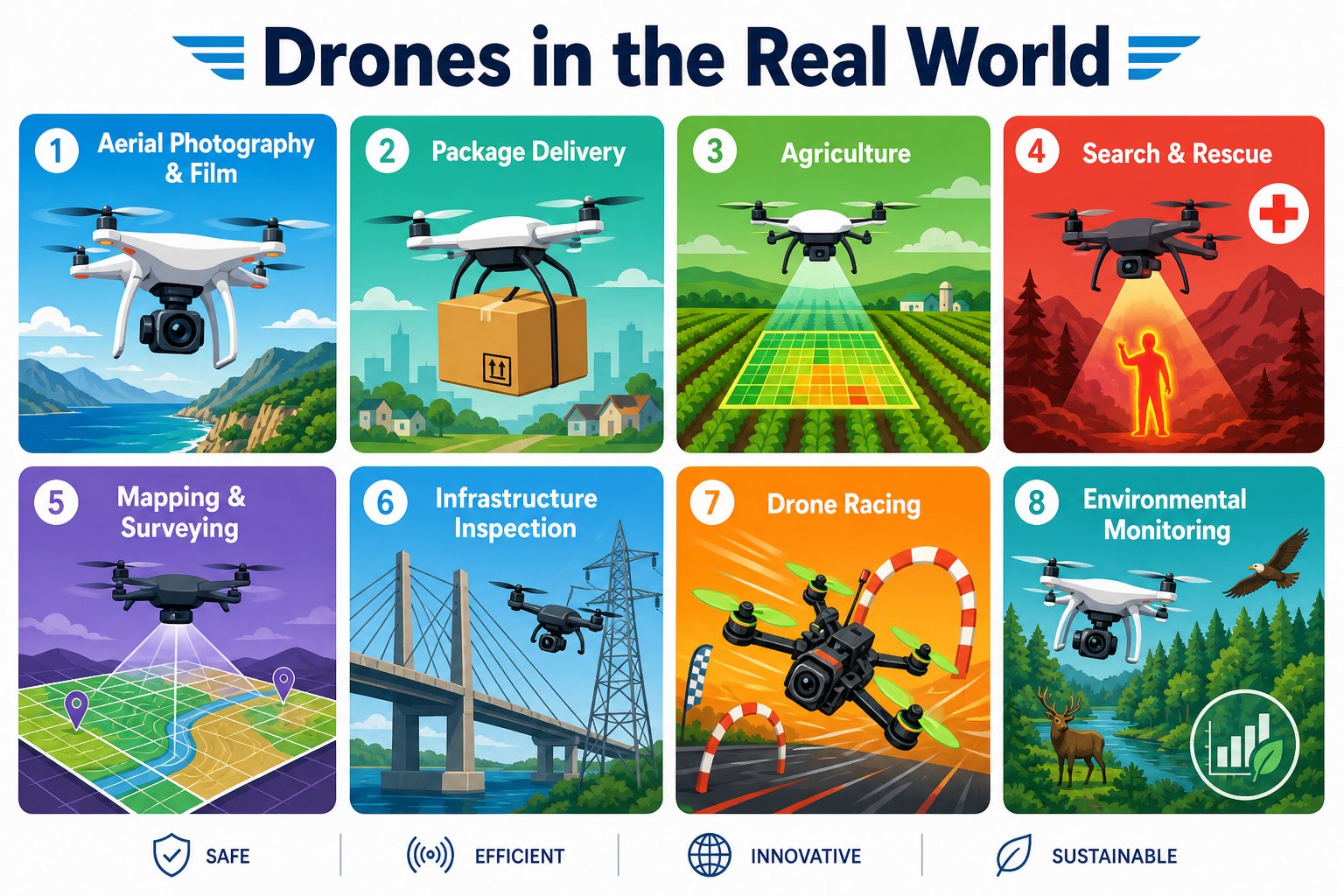
Drones at work across dozens of industries
Industries transformed by drones
Film, photography, and sports
Film, photography, and sports
Sweeping aerial shots that once needed a helicopter and a crew now come from a single drone. Movies, live sports, real estate, and weddings all rely on drone cinematography.
Delivery and logistics
Delivery and logistics
Companies deliver medicine, blood, food, and packages by drone - reaching remote villages in minutes and cutting delivery times in cities.
Agriculture
Agriculture
Farmers fly drones to scan fields, spot sick or thirsty crops from the air, map soil, and spray precisely where it’s needed - growing more food with less waste.
Search and rescue
Search and rescue
Drones with thermal cameras find lost hikers and disaster survivors by their body heat, day or night, and reach places rescuers can’t get to quickly.
Mapping and surveying
Mapping and surveying
Drones photograph land from above and stitch the images into precise 3D maps for construction, mining, and city planning.
Inspection
Inspection
Instead of sending people up ladders and towers, drones inspect bridges, power lines, wind turbines, and rooftops safely and fast.
Science and conservation
Science and conservation
Researchers track wildlife, monitor forests and glaciers, count animals, and study storms - all without disturbing the environment.
Drone racing and sport
Drone racing and sport
FPV racing is a fast-growing sport where pilots fly custom drones through courses at over 100 mph, watching through video goggles.
Why drones are so useful
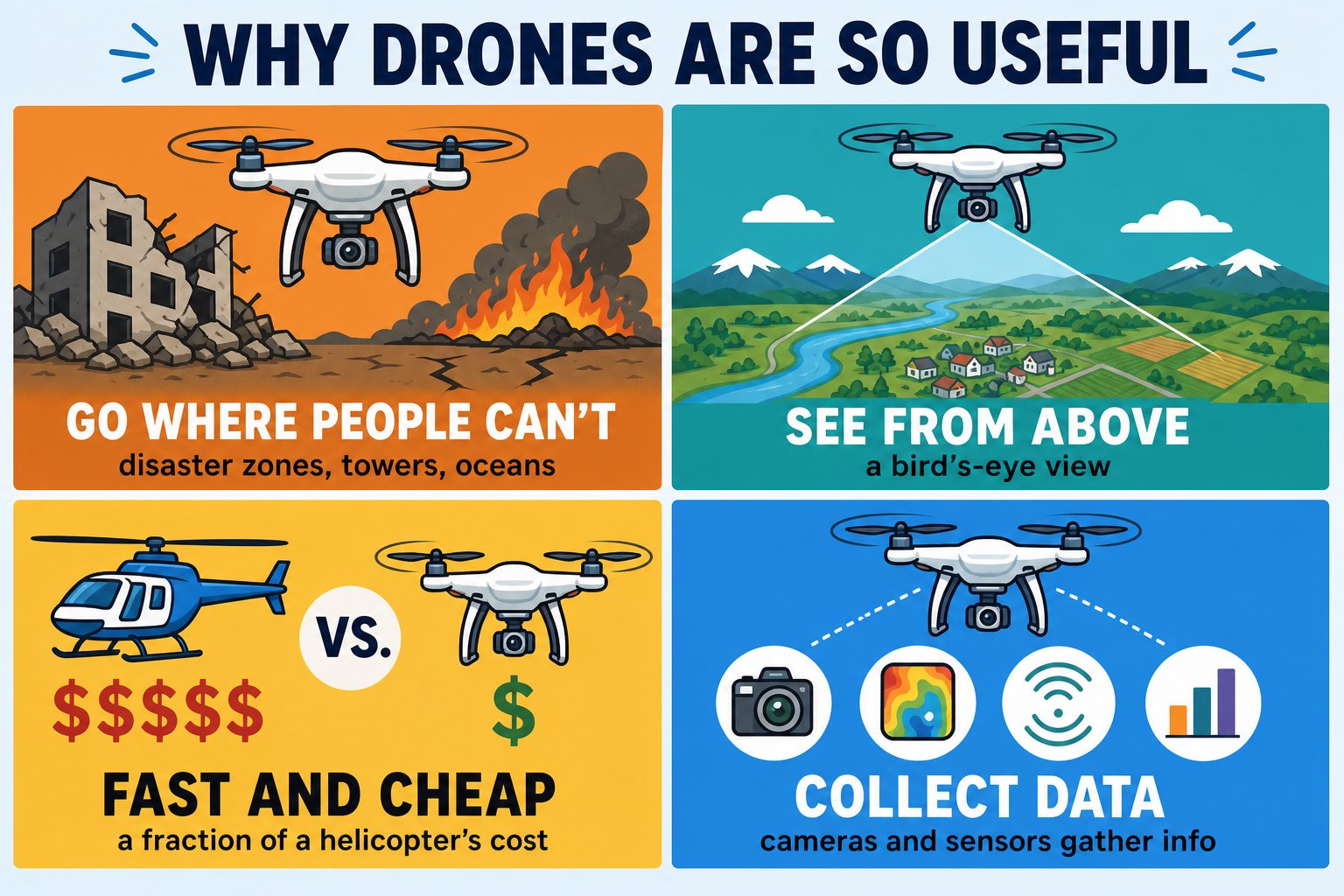
Four superpowers that make drones worth it for real jobs
They go where people can't
Into disaster zones, up towers, over oceans - safely and without risking a person.
They see from above
A bird’s-eye view reveals things you’d never notice from the ground.
They're fast and cheap
A drone flight costs a tiny fraction of a helicopter or a crew of workers.
They collect data
Cameras and sensors turn every flight into maps, measurements, and insights.
The technology behind the jobs
Notice how the same building blocks show up everywhere: a camera, sensors, stable flight, and increasingly code that lets the drone fly missions on its own. That last part - programming - is exactly what you learned this week, and it’s what turns a flying camera into a tool that can inspect a whole bridge or map an entire farm by itself.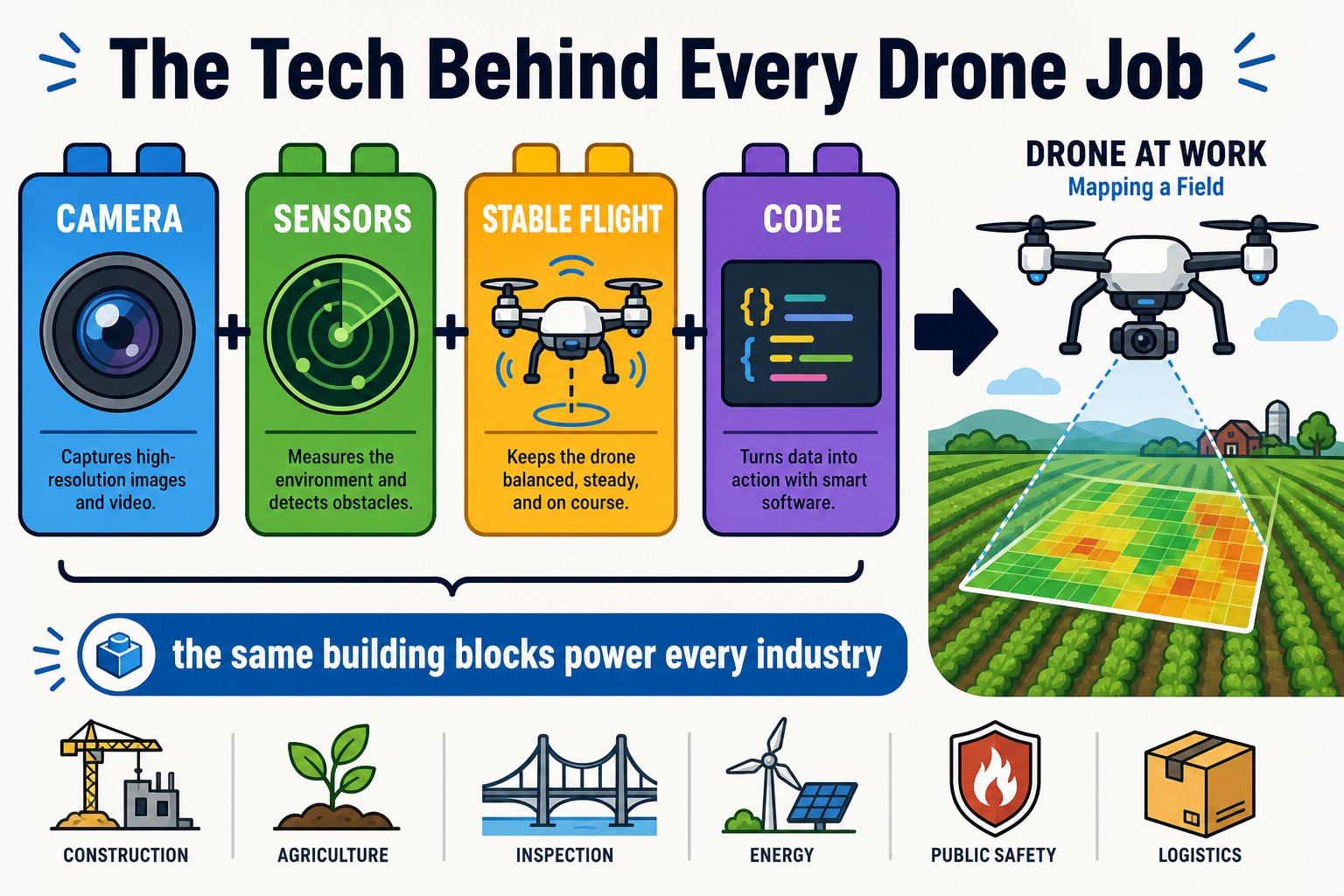
The same stack of technologies powers every drone job - and you've touched all of them this week
Make it personal: The Echo Drone in your hands has the exact same four layers as a $30,000 mapping drone - flight, sensors, camera, and code. The difference is scale, not concept. Everything you learned this week is the real foundation.
You can name at least five industries that use drones and explain why drones are so valuable for those jobs.