

One idea, many shapes
All drones fly without a pilot on board, but they come in very different shapes. The design decides how long it flies, how much it carries, and what it’s good at.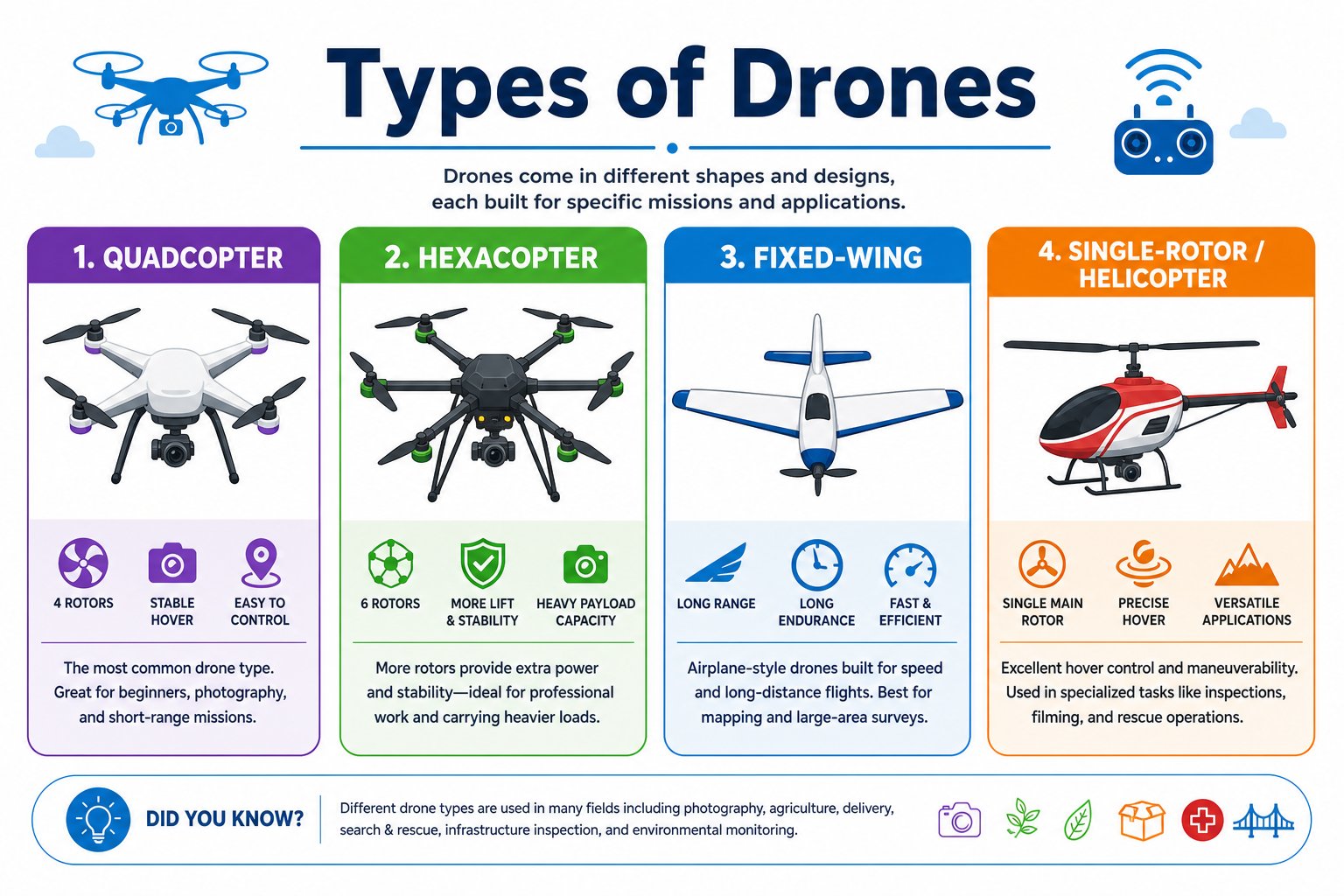
The four main drone designs, each built for a different mission
The main designs
- Quadcopter
- Hexacopter / Octocopter
- Fixed-wing
- Single-rotor / Helicopter
Four rotors. The most common design and the one you’re building.
- Strengths: Simple, stable, hovers in place, easy to control, cheap
- Trade-offs: Shorter flight time, limited payload
- Used for: Learning, photography, racing, inspection, most consumer drones
How to pick a design
The right drone depends on the mission. Engineers weigh three questions: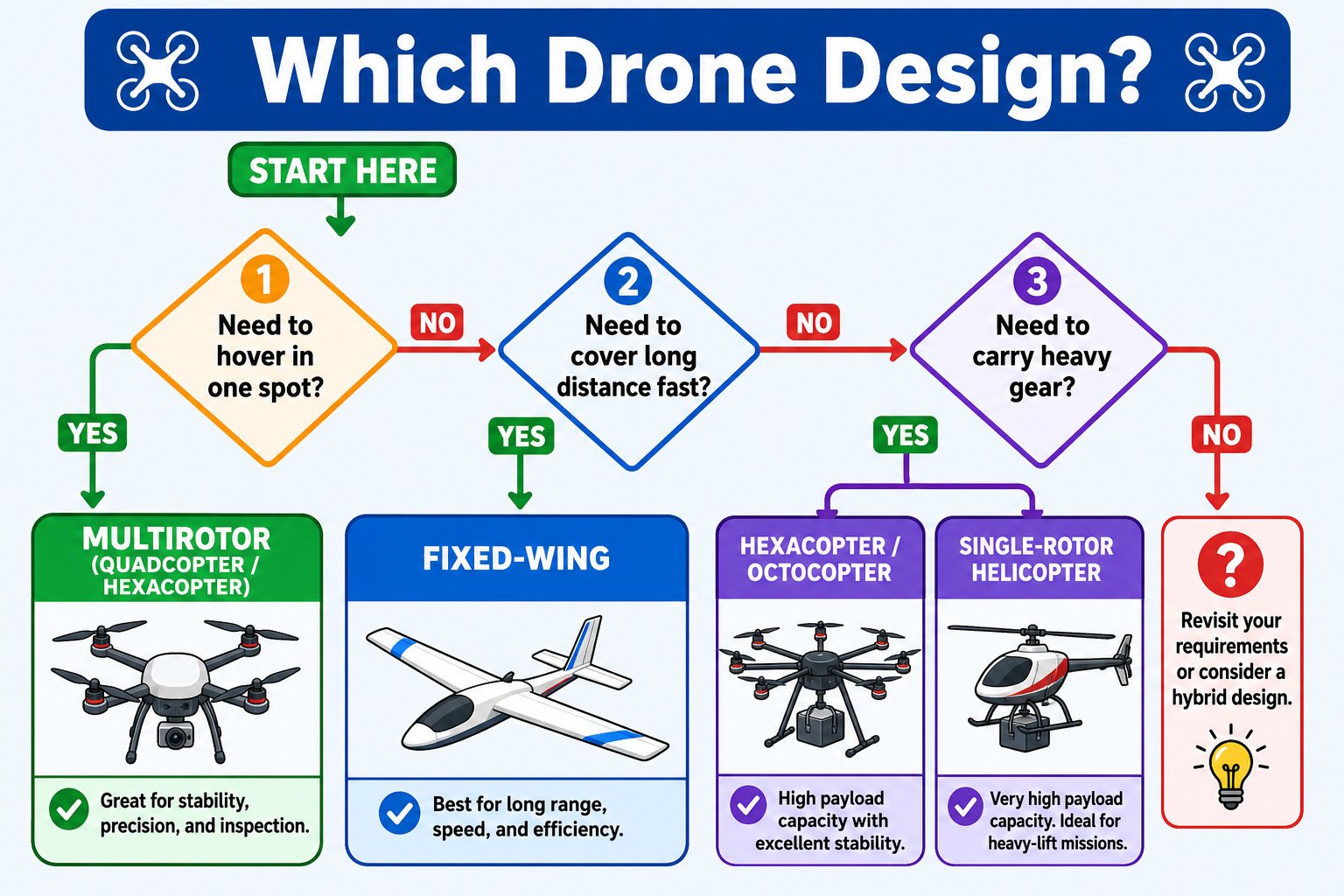
Follow the questions to the right drone for the job
Hover or cruise?
Need to stay still over one spot? Choose rotors. Need to cover distance? Choose wings.
How much to carry?
Heavier cameras and cargo need more or bigger rotors for extra lift.
How long in the air?
Fixed-wing drones fly far longer; multirotors trade endurance for control.
Why a quadcopter for learning?
The quadcopter hits the sweet spot for a classroom: it hovers so you can practice in one spot, it’s stable enough for beginners, it’s small and safe indoors, and its four-motor layout makes the physics of flight easy to see and understand.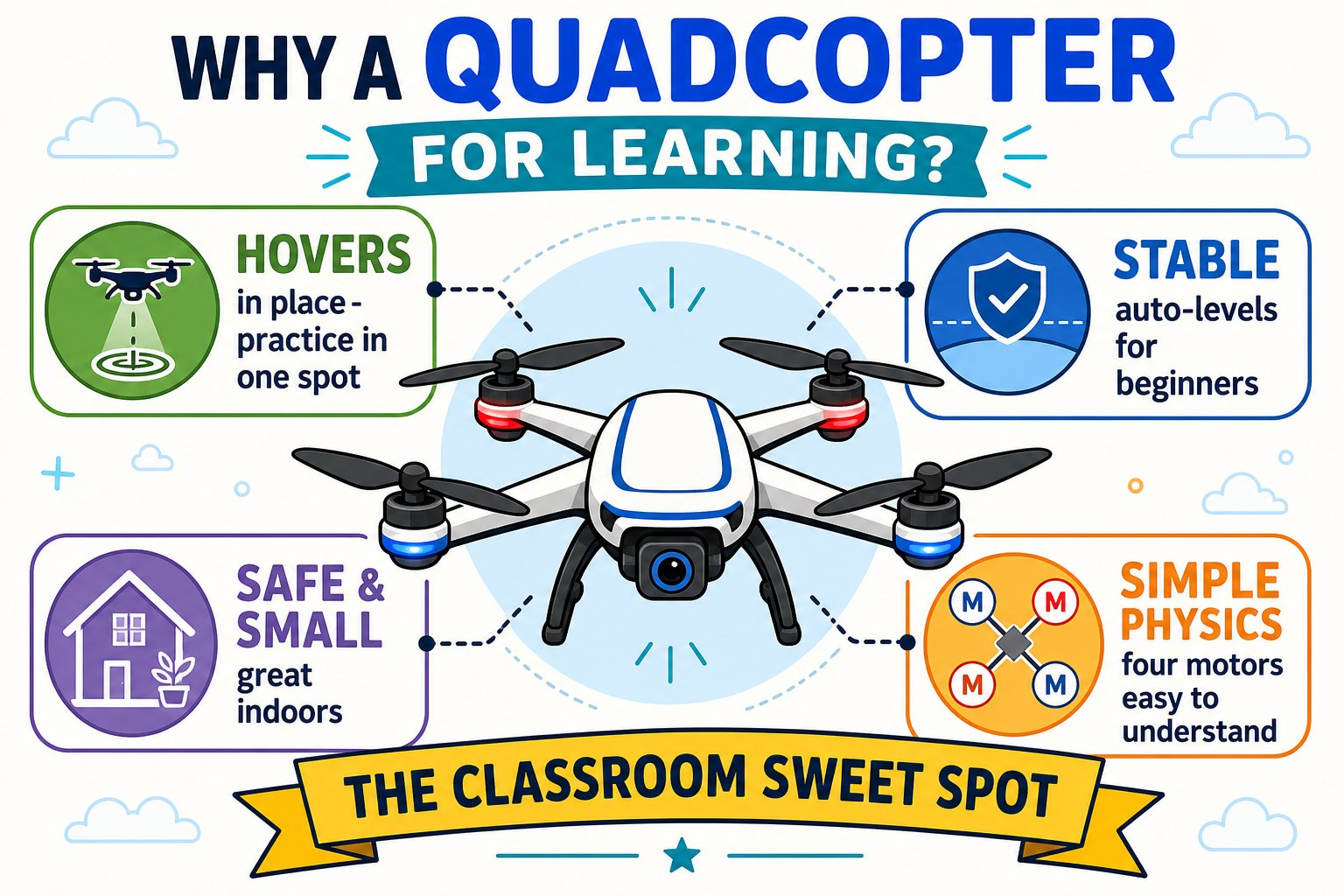
Four reasons the quadcopter is the perfect drone to learn on
You can name the four main drone types and explain why a quadcopter is the best choice for learning to fly and code.