

Where your print sticks
The build surface is the top layer of the bed that your first layer grips. Get it right and prints stick during printing and release cleanly when done. Get it wrong and prints either lift off mid-job or fuse so hard you cannot remove them. Your Adventurer 5M uses a flexible PEI plate, but it helps to know the whole landscape.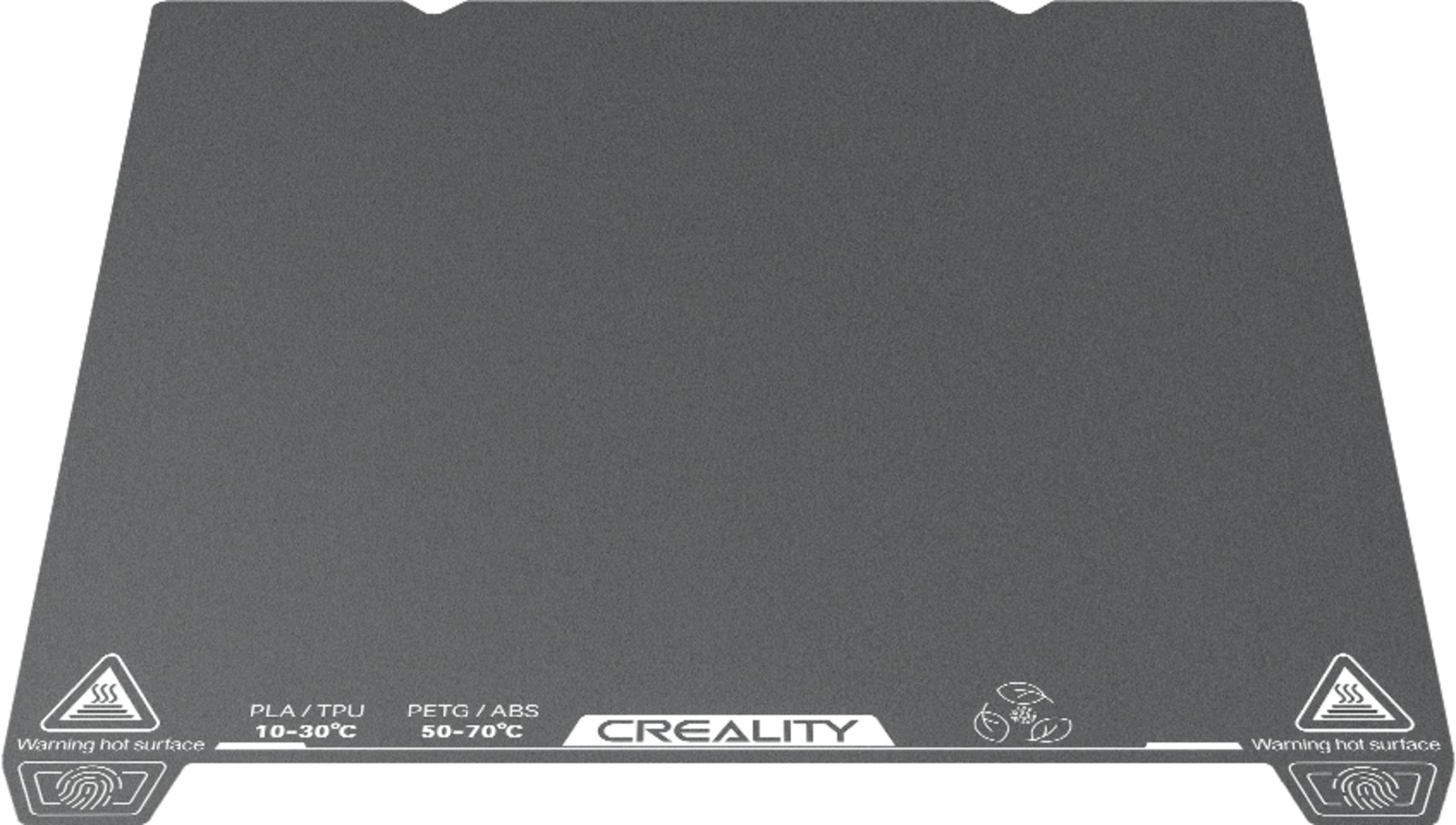
A textured PEI-style flexible build plate with temperature guidance printed on it
Two parts of a bed
Every bed is really two things working together:Bed base
The heated (or unheated) platform underneath. It provides warmth and a flat foundation.
Build surface
The top layer the plastic actually touches - glass, PEI, tape, or a magnetic sheet. This is what determines adhesion.
Common build surfaces
Glass beds
A flat sheet of glass (often borosilicate) sits on the heated bed.Advantages
Exceptionally flat for perfect first layers, a glossy smooth bottom finish, easy to clean with IPA, durable and scratch resistant, and chemically inert.
Trade-offs
Lower natural adhesion (often needs glue), heavier and more fragile than flex plates, and no easy “pop off” removal.
PEI beds (what you have)
PEI (polyetherimide) is the modern favorite: excellent adhesion, chemical resistance, and easy use. Your Adventurer 5M’s flexible, magnetic PEI plate is a big reason it is so beginner friendly.Use PEI if you want strong, consistent adhesion across many materials with low maintenance and easy, flexible removal. Be careful with abrasive filaments (protect the surface) and avoid scratching it with metal tools.
Getting prints to stick (and release)
The single biggest factor in adhesion is the first-layer nozzle height. Too close and the nozzle scrapes; too far and the filament will not stick. You want an even, slightly squished first layer.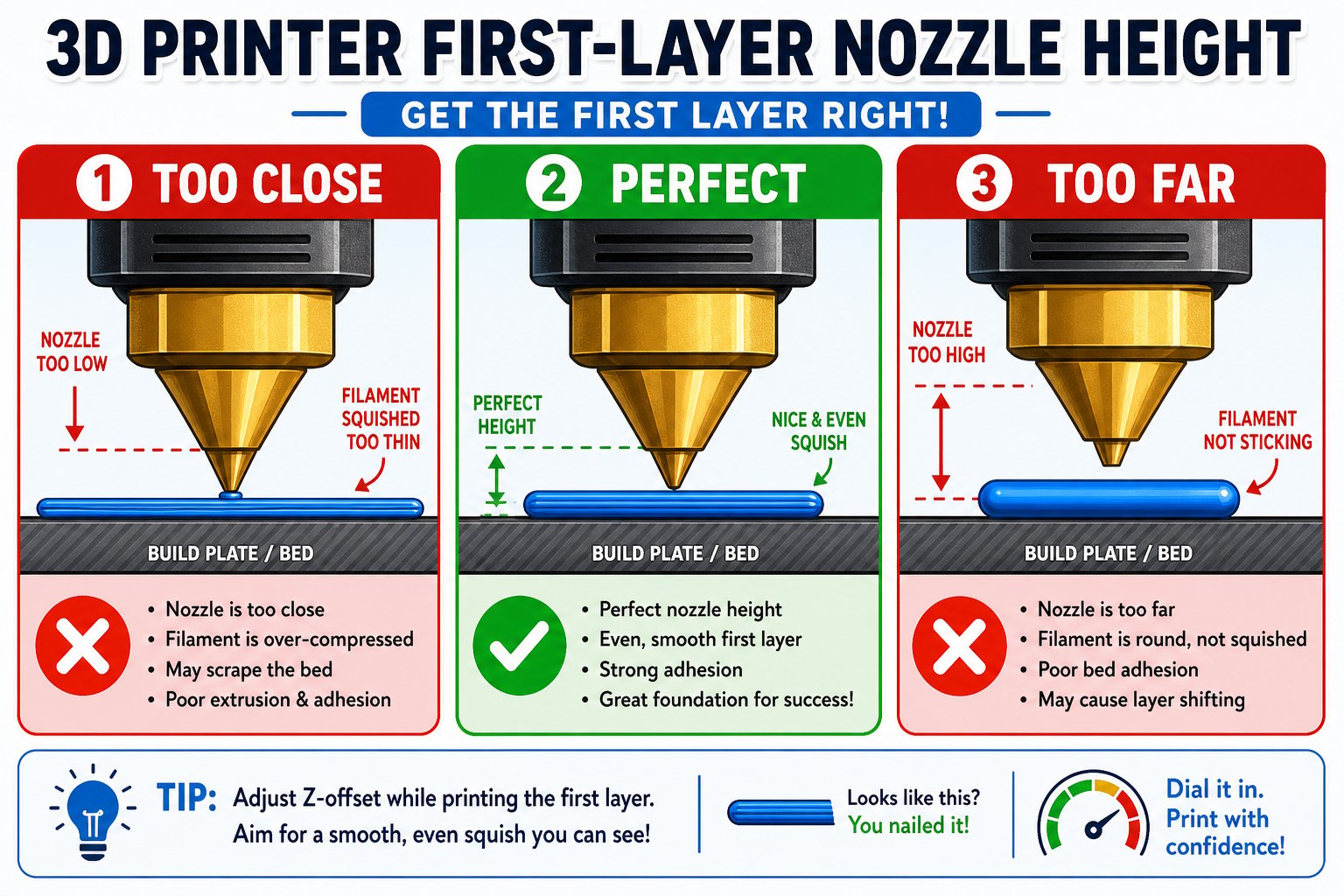
Dialing in the first-layer nozzle height
1
Level and set the first layer
Good adhesion starts with a properly leveled bed and the right nozzle height. The Adventurer 5M’s auto-calibration handles most of this.
2
Use the right bed temperature
Match the bed temp to your filament (about 60 C for PLA). A warm bed dramatically improves first-layer grip.
3
Keep the surface clean
Oils from your fingers ruin adhesion. Wipe the plate with isopropyl alcohol (IPA) when prints stop sticking.
4
Add glue when needed
A thin coat of the included glue stick helps stubborn prints stick - and, on PEI, protects the plate from aggressive materials like PETG.
5
Release by flexing
When the print finishes and the bed cools, lift the flexible plate off and bend it gently. Most prints pop right off; use a scraper only if needed.
You know the difference between the bed base and build surface, why PEI is a great all-around choice, and the steps to make prints stick and release cleanly.