

Why network architecture matters
Every organization - from a small donut shop to a multinational corporation - relies on a network to function. Email, websites, payment processing, file sharing, and security cameras all run over a network. If you don’t understand how the network is structured, you can’t defend it. Network architecture is the blueprint of how devices, servers, and security systems are connected. As a defender, your job is to know where traffic flows, where sensitive data lives, and where an attacker could break in.Think of network architecture like the floor plan of a building. A security guard who doesn’t know the layout can’t protect it. The same applies to cybersecurity - you need to know the map before you can defend the territory.
Traditional network architecture
Most organizations use what’s called a monolithic or traditional network architecture. It looks something like this:The DMZ (demilitarized zone)
The DMZ is a buffer network that sits between the public internet and your internal network. It’s like the lobby of a secure office building - visitors can enter the lobby, but they can’t walk straight into the executive offices. The DMZ hosts services that need to be accessible from the internet (like your website) without exposing your internal systems. What goes in the DMZ:- Public-facing web servers
- Email gateways
- DNS servers
- VPN endpoints
- Employee workstations
- Database servers with sensitive data
- HR and payroll systems
- Internal file shares
Front end vs back end
You’ll hear “front end” and “back end” throughout cybersecurity and software development:
In network architecture, front-end servers sit closer to the internet (often in the DMZ), while back-end servers sit deeper in the internal network where they’re harder for attackers to reach.
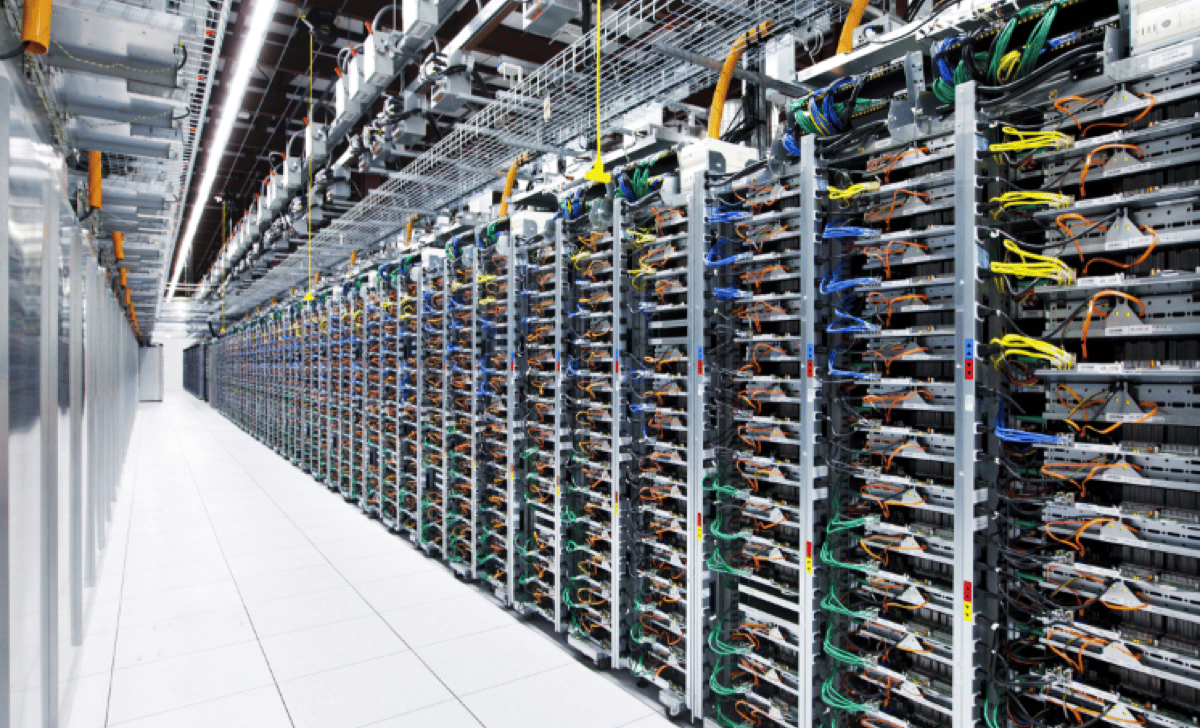
Inside a data center - rows of servers that power the internet
Common server types
Organizations run different servers for different functions. Each one is a potential target for attackers, so you need to know what they do and why they matter.Web server
Web server
What it does: Hosts websites and web applications. When you visit a website, you’re connecting to a web server.Why attackers target it: Web servers are internet-facing, making them the most exposed target. Attackers exploit vulnerabilities like SQL injection, cross-site scripting, or outdated software to break in.Examples: Apache, Nginx, Microsoft IIS
File server
File server
What it does: Stores and shares files within the organization. Employees access shared drives, documents, and resources through the file server.Why attackers target it: File servers often contain sensitive business documents, intellectual property, contracts, and employee data. Ransomware frequently targets file servers to encrypt everything at once.Examples: Windows File Server (SMB), Samba, NFS
Database server
Database server
What it does: Stores structured data - customer records, transaction histories, inventory, user accounts, and passwords.Why attackers target it: Databases are the crown jewels. A breach here means stolen customer data, leaked passwords, and regulatory fines. This is where SQL injection attacks are aimed.Examples: MySQL, PostgreSQL, Microsoft SQL Server, Oracle
Email server
Email server
What it does: Handles sending and receiving email for the organization.Why attackers target it: Email is the #1 attack vector for phishing. Compromising an email server lets attackers read confidential communications, send phishing emails from legitimate accounts, and intercept password reset links.Examples: Microsoft Exchange, Postfix, Google Workspace (cloud-based)
AAA server
AAA server
What it does: Handles Authentication (who are you?), Authorization (what can you access?), and Accounting (what did you do?).Why attackers target it: If an attacker compromises the AAA server, they control who can access the entire network. They can create admin accounts, disable logging, and move freely through all systems.Examples: RADIUS, TACACS+, Microsoft Active Directory
IP addressing
Every device on a network needs an address so other devices can find it and communicate with it. That address is called an IP address (Internet Protocol address).What is an IP address?
An IP address is your device’s unique identifier on a network. It works like a mailing address - without it, data doesn’t know where to go. An IPv4 address looks like this:192.168.1.25
It’s made up of four numbers (called octets), each ranging from 0 to 255, separated by dots.
Public vs private IP addresses
Not all IP addresses are the same. There are two types:- Public IP
- Private IP
Visible from the internet. Your public IP is the address the outside world sees when your network communicates with the internet.
- Assigned by your Internet Service Provider (ISP)
- Unique across the entire internet
- Used for websites, email servers, and anything accessible from outside
The house analogy
Think about your teammate Blair’s house:- The street address (e.g., 123 Main Street) is the public IP - it’s how the postal service (the internet) finds the house from the outside.
- The rooms inside (kitchen, bedroom, living room) are the private IPs - they exist within the house, and people inside know how to find them, but someone standing on the street can’t see them.
- The front door is the router - it’s the single entry point that connects the inside to the outside.
This is why you can’t directly access someone’s laptop just by knowing their home’s public IP address. The router acts as a gatekeeper between the public internet and the private devices inside.
DHCP - automatic IP assignment
DHCP (Dynamic Host Configuration Protocol) automatically assigns IP addresses to devices when they connect to a network. Without DHCP, you would have to manually configure an IP address on every device - every phone, laptop, smart speaker, and tablet. How it works:- Your device connects to the Wi-Fi network
- Your device broadcasts: “I need an IP address!”
- The DHCP server (usually your router) responds: “Here, use
192.168.1.25” - Your device uses that address until the lease expires, then requests a new one
Common private IP ranges
The Internet Engineering Task Force (IETF) reserved three blocks of IP addresses for private use. These are the ranges you will see on internal networks:Defense in depth
Defense in depth is the strategy of layering multiple security controls so that if one fails, the next one catches the attacker. No single defense is perfect, so you stack them.The home analogy
Think about protecting your own home:1
Front door with a deadbolt
The first barrier. It stops casual intruders, but a determined attacker can pick a lock or kick the door in.
2
Alarm system
If someone gets past the door, the alarm triggers. Now you know there’s a problem, and the clock starts ticking for the intruder.
3
Security cameras
Even if the alarm doesn’t stop them, cameras capture evidence. You know who it was and what they did.
4
Locked interior rooms
Not every room needs to be accessible. Your most valuable belongings are behind another lock.
5
A safe
Your most critical items - passports, cash, irreplaceable documents - are in a safe that requires a separate code or key.
How a network attack flows
Understanding the path an attack takes helps you know where to place your defenses. Here’s a typical flow:Exercise: Map your home network
Take five minutes and think about (or sketch) the network architecture of your own home:1
Identify your gateway
What is your router? Is it provided by your ISP, or did you buy your own? This is the front door of your network.
2
List your devices
How many devices are connected? Laptops, phones, smart TVs, game consoles, smart speakers, security cameras, smart thermostats - list them all.
3
Identify public vs private
Does your network have a public IP? (Yes - your ISP assigned one.) What private IP range does your router use? Check by looking at your device’s network settings.
4
Find the security controls
Does your router have a built-in firewall? Is your Wi-Fi password-protected? Do you have a guest network? These are all security controls you already use.
5
Spot the gaps
Are there devices with default passwords? Is your router firmware up to date? Could a neighbor connect to your Wi-Fi? These are the vulnerabilities in your home network.
Key takeaways
- Network architecture is the blueprint of how devices and servers are connected - you can’t defend what you don’t understand.
- The DMZ is a buffer zone between the internet and your internal network, hosting public-facing services.
- IP addresses are how devices find each other - public IPs are visible from the internet, private IPs are only visible inside your network.
- DHCP automatically assigns IP addresses so you don’t have to configure each device manually.
- Defense in depth layers multiple controls so that no single failure compromises the entire network.
- Every layer an attacker has to bypass gives defenders more time to detect and respond.